A Founder’s Guide to Working With Fractional Engineers: Roles, Handoffs and Weekly Reviews
A founder’s guide to working with fractional engineers: clear roles, written handoffs, weekly reviews and keeping ownership of your code and accounts.
Working with fractional engineers means bringing in experienced people for part of their week, or for a defined stretch of work, instead of hiring a full in-house team. For a pre-seed founder, that can be a sensible way to get senior skills onto an MVP without committing to several full-time salaries.
The arrangement usually succeeds or struggles for reasons that have little to do with code. It comes down to three things: who owns which decisions, how work moves between people, and how progress is checked each week. This guide covers each of those in practical terms, so you can set up a fractional team that stays clear and accountable from the first sprint.
What a fractional engineering setup looks like
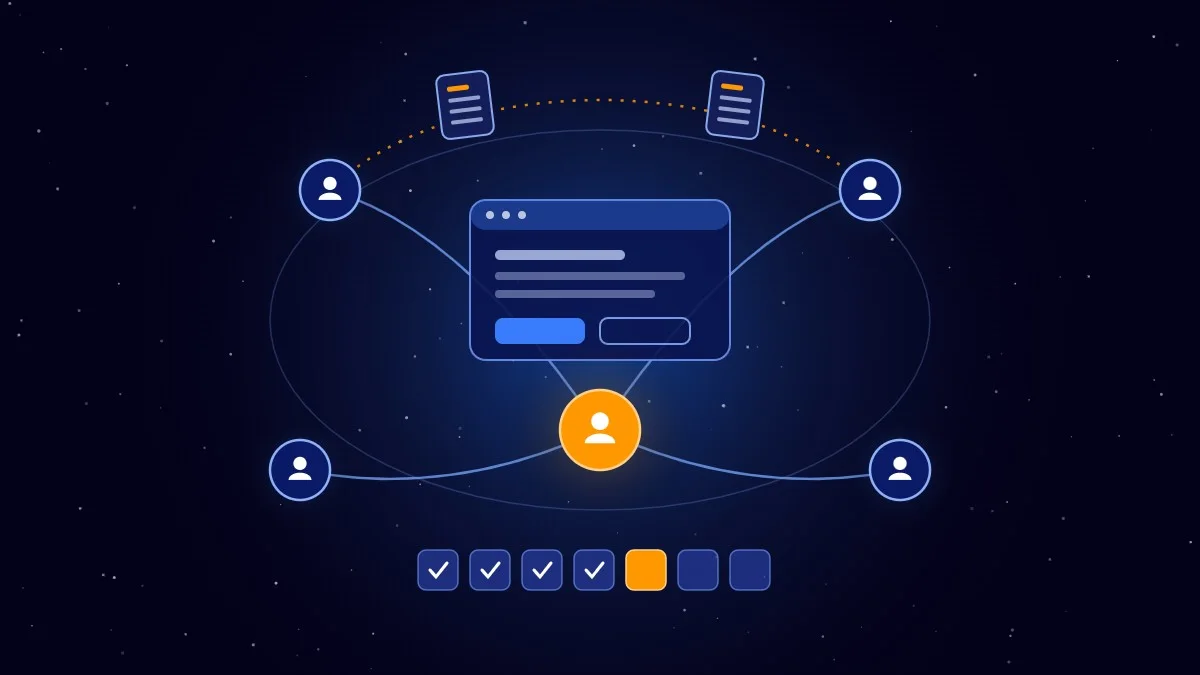
A fractional team is often small. A common shape is a part-time technical lead, one or two developers, and QA support that comes in at specific points. Some members may work a few days a week, others may be fully on your project for a few weeks and then step back.
That flexibility is the main benefit, and it is also the main risk. When people are not in the same room every day, context gets lost unless it is written down. Decisions that would happen naturally in a hallway conversation need a place to live. Most of the habits in this guide exist to solve that one problem.
If you are still weighing fractional engineers against an agency or an in-house hire, our guide on how much a pre-seed startup should spend on development compares the options. This article assumes you have chosen the fractional route and want to make it work well.
Roles: who owns what
Clear roles matter more in a part-time team than in a full-time one, because there is less overlap to catch gaps. Before any work starts, agree who is responsible for each of the following.
The founder
You own the product direction. That means deciding who the product is for, which problem it solves first, and what goes into each release. You also own the final call on scope changes, budget and timeline. Fractional engineers can and should advise on these, but the decision stays with you.
The technical lead
The technical lead owns how the product is built. This includes architecture, the tech stack, code review standards and technical risk. In a small team this person is often the one who turns your product priorities into tasks the developers can pick up. If you are a non-technical founder, this is the role you will lean on most, so agree early how often they will be available and how quickly they respond.
Developers and QA
Developers own delivering the tasks assigned to them, including tests and short notes on anything unusual they built. QA owns checking that finished work behaves as described, on the devices and browsers that matter to your users. When QA is part-time, decide in advance which releases it must sign off before they go live.
A short list of decisions that should always come back to you:
- Adding or removing features from the current release
- Anything that changes cost, such as new paid services or extra engineering time
- Choices that affect user data, privacy or payments
- Dates you have shared with investors, pilots or early customers
Handoffs that keep context intact
A handoff is any point where work moves from one person to another. With fractional engineers these happen often, so it is worth making them consistent.
From founder to engineers
Every piece of work should start with a short written brief. It does not need to be long. It should cover the problem being solved, who the user is, what done looks like, and what is out of scope. Designs or rough sketches help, and so do one or two examples of how a real user would move through the feature.
The phrase “definition of done” comes from agile practice, and the Scrum Guide describes it as a shared understanding of when work is complete. For a small MVP team, a simple version might be: code reviewed and merged, tested on staging, and a short note added explaining anything the next person needs to know.
From engineers back to you
When a task is finished, you should be able to see it working, usually on a staging environment. Ask for a short written summary alongside it: what was built, anything that changed from the brief, and any known issues. This takes a few minutes to write and saves a lot of back and forth later.
Between engineers
Part-time team members may not overlap much, so handovers between them need to be written, not verbal. Pull request descriptions, a shared task board and a simple decisions log all help. Some teams record important technical choices as short architecture decision records, which explain what was decided and why. That record becomes very useful when someone new joins or when you revisit a choice months later.
A weekly review that keeps things moving
A single weekly review gives a fractional team a steady rhythm. Keep it short and focused on working software, not status reports. A simple agenda that works for many small teams:
- Demo. Show what was completed this week, running on staging.
- Planned versus done. Compare what was planned with what shipped, and talk briefly about why anything slipped.
- Blockers and decisions. List anything waiting on you, such as feedback, content, access or a scope call.
- Next week. Agree the priorities in order, so everyone knows what to pick up first.
- Risks. Note anything that could affect the timeline or budget, even if it is only a possibility.
Write down the outcome in a few lines and share it after the call. Between reviews, a short written update midweek helps you catch problems early without adding another meeting.
The review is also where scope decisions are best made. If new ideas come up during the week, collect them and decide at the review whether they replace something already planned. Our feature cutting playbook covers how to make those calls.
Keep ownership of your accounts and code
With any external team, make sure your company owns the core accounts from day one. That usually includes the code repository, cloud hosting, domain, app store developer accounts, analytics and any paid services. Invite engineers into these accounts with their own logins, rather than having them create accounts in their own names.
Store shared credentials in a password manager, and keep a simple list of who has access to what. When someone leaves the project, you can then remove their access in one sitting. Agreements with fractional engineers should also state clearly that the work they produce belongs to your company. For contract wording, speak to a lawyer who knows your jurisdiction.
A worked example
The following is a hypothetical example to show how these pieces fit together.
A non-technical founder is building an MVP for a booking app aimed at small fitness studios. She works with a fractional team: a technical lead two days a week, a full-stack developer full-time for the build, and a QA engineer who joins before each release.
In the first week, she and the technical lead agree the roles on a single page. She owns the feature list and all scope changes. The technical lead owns architecture and reviews every pull request. The company owns the repository, hosting and app store accounts, and the engineers are invited in.
Each feature starts with a half-page brief. For the class booking feature, the brief describes the studio owner and the member, the steps to book and cancel a class, and states that waitlists are out of scope for the first release. The developer writes a short note when the feature reaches staging, including one known issue with time zones.
Every Friday, the team holds a thirty-minute review. In week four, the demo shows booking working end to end, but payments are behind because the founder has not yet chosen a payment provider. That decision is logged as a blocker, she makes the call over the weekend, and the plan for the next week is adjusted. Before the first pilot release, QA tests the booking flow on the phones the studio members actually use, and the founder signs off.
Nothing in this setup is complicated. It works because each person knows what they own, handoffs are written, and the weekly review gives everyone the same picture of progress.
Signs the setup needs attention
- You find out about problems days after they started.
- Engineers are waiting on you for answers more than they are building.
- The same questions come up repeatedly because the answers were never written down.
- You cannot see working software each week, only descriptions of progress.
- You are unsure who has access to your code or hosting.
Each of these usually points back to a gap in roles, handoffs or the weekly review, and can be fixed without changing the team.
A realistic first step
Start with a two-week trial on one well-defined feature. Write the roles on one page, agree a definition of done, set up the accounts in your company’s name, and hold your first weekly review at the end of week one. By the end of the trial you will have a clear sense of how the team communicates, how accurate their estimates are, and whether the working rhythm suits you.
If you have not settled your stack yet, the MVP tech stack decision scorecard is a useful companion to that first conversation with your technical lead.
Frequently asked questions
What are fractional engineers?
Fractional engineers are experienced engineers who work with a company part-time or for a defined period, instead of as full-time employees. Startups often use them to access senior skills during an MVP build without hiring a full in-house team.
How many hours a week should a fractional technical lead spend on an MVP?
It depends on the size of the build and how experienced the rest of the team is. What matters most is agreeing the availability in advance, including response times, so the developers are not left waiting for reviews or decisions.
Do I need to be technical to manage fractional engineers?
No. You need to be clear about what you want built and why, and willing to make decisions quickly. A good technical lead handles the technical choices and explains the trade-offs in plain language.
How do I keep control of my code and IP?
Create the repository, hosting and other core accounts in your company’s name, invite engineers with individual logins, and make sure your agreements state that the work belongs to the company. A lawyer can confirm the right contract wording for your situation.
How long should the weekly review be?
For a small team, around thirty minutes to an hour is usually enough if it focuses on a demo, blockers and next week’s priorities. If it regularly runs longer, the agenda probably needs tightening.
Where Zimozi fits in
Zimozi provides flexible engineering support for startups, including access to fractional engineers, technical leadership and QA for MVP builds. We work with founders in Singapore and beyond to shape a first release, set up the working rhythm described here, and keep code and accounts under the founder’s ownership. If you are also preparing to raise, our post on what investors want to see in your MVP covers that side.
Ready to plan your first sprint?
Fractional engineers can give a startup the skills it needs at the pace it can afford. The arrangement works best when roles are clear, handoffs are written and progress is reviewed every week. If you are considering a fractional team for your MVP, Zimozi can help define a small first version and assess the technical requirements. Would you like to discuss the idea?