MVP Tech Stack Selection: A Decision Scorecard for Non-Technical Founders
At some point in building an MVP, a developer or agency will ask you to choose between two or three different technology options. You will hear words like Node, Django, Firebase, or Bubble,
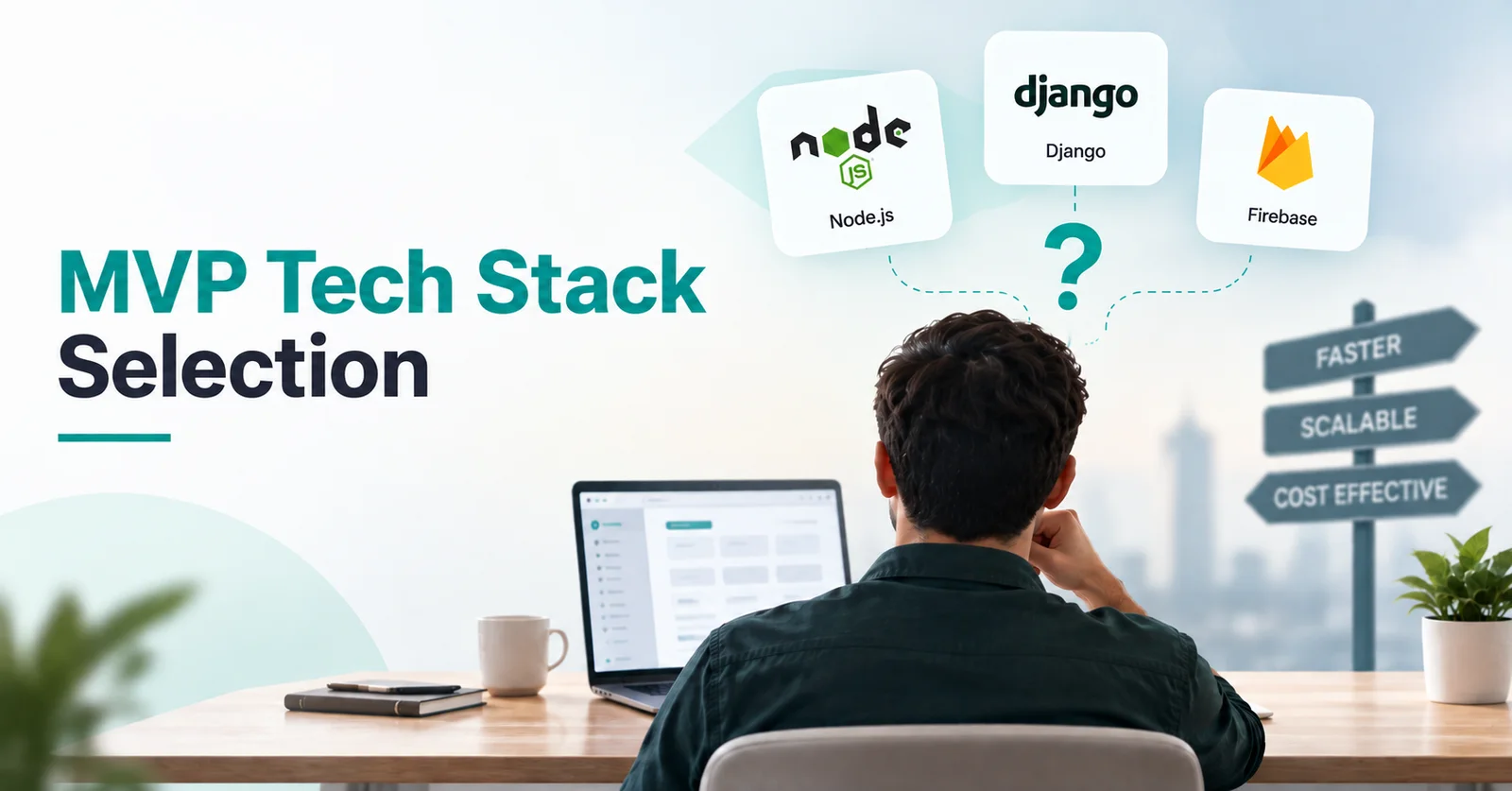
At some point in building an MVP, a developer or agency will ask you to choose between two or three different technology options. You will hear words like Node, Django, Firebase, or Bubble, and you will be expected to have an opinion, or at least sign off on someone else’s. MVP tech stack selection is the decision about which programming languages, frameworks, databases, and hosting setup your first product will be built on. It happens early, often before you have paying customers, and it shapes how fast you can build, what it costs to run, and how easy it is to bring in new developers later. Getting this decision roughly right does not require you to become technical. It requires knowing what questions to ask and what trade-offs to expect, so the choice fits your product and your budget instead of your developer’s personal preference.
Why This Decision Trips Up Non-Technical Founders
Most founders do not get MVP tech stack selection wrong on purpose. It usually goes wrong for a few common reasons:
- The stack is chosen because it is what the first developer or freelancer already knows, not because it fits the product.
- A newer or less common framework is picked because it looks modern, without checking if local talent can support it later.
- Price is the only factor considered, and the cheapest option often comes with a narrower, harder to maintain stack.
- Nobody asks what happens if the current developer becomes unavailable.
None of these reasons are unreasonable on their own. The problem is that they are rarely weighed against each other. A scorecard fixes that by putting the same questions in front of every option.

What a Tech Stack Decision Should Actually Weigh
Before comparing specific technologies, it helps to agree on what actually matters for MVP tech stack selection. These are the factors worth weighing for most early stage MVPs:
- Build speed: how quickly a working first version can realistically ship with this stack.
- Running cost: hosting, licensing, and third party service fees once the product is live, not just the cost to build it.
- Talent availability: whether you can hire, or replace, a developer who knows this stack without depending on one person.
- Scalability needs: whether your product genuinely needs to handle heavy load on day one, or whether that concern can wait.
- Security and compliance: relevant if you handle payments, personal data, or health information.
- Integration needs: the third party services, payment processors, or APIs the product must connect to.
- Ownership: whether the code is fully yours, or built on a no-code or proprietary platform you do not own outright.
A Simple Scorecard for MVP Tech Stack Selection
Once you know what matters, scoring each option against the same list turns the comparison into something concrete instead of a matter of opinion. Rate each factor from 1 to 5 for every option you are considering, then look at where the biggest gaps are.
| Factor | Question to ask your developer | Why it matters |
|---|---|---|
| Build speed | How long until we have something real users can try? | Slow first versions burn runway before you learn anything |
| Running cost | What will this cost to host once we have real users, not just today? | Cheap to build can still be expensive to run |
| Talent availability | If you left the project, how easily could someone else pick this up? | Reduces dependence on one person |
| Scalability | What happens if usage grows ten times in six months? | Prevents both under and over building |
| Security | What do we need in place for the data or payments we handle? | Avoids costly retrofits later |
| Integrations | Does this stack connect cleanly to the tools we already rely on? | Fewer custom workarounds |
| Ownership | Do we own the code, and can we move it elsewhere if needed? | Protects you from vendor lock-in |
Consider a practical example. A founder is building a booking tool for independent tutors and is deciding between a no-code platform and a custom built application. On build speed, the no-code option wins clearly: a working version could be ready in two to three weeks instead of two to three months. On running cost, the two are close at this early stage, since usage is still low. On talent availability, the custom build wins, because more developers are available locally who can maintain a standard web stack than a specific no-code tool. On integrations, it depends on the payment processor and calendar tools the tutors already use, so this needs a direct check rather than an assumption. On ownership, the custom build wins outright, since the no-code platform holds the application logic, not the founder. Scored honestly, the no-code option looks like the right choice to validate demand quickly, with a plan to move the core booking flow to a custom stack once there are paying tutors and a clearer sense of what the product needs to do. This is the same thinking behind keeping early development spend focused on what you actually need to prove.
Using the Scorecard With Your Development Team
Good MVP tech stack selection works best as a conversation, not a form you fill in alone. Bring the scorecard to your first serious conversation with a developer or agency and ask directly why they are recommending a particular stack for your specific product, not stacks in general. It is also worth confirming who owns the code repository and who has access to it from the start. This is a simple question to ask before work begins, and it is much harder to resolve after a falling out or a missed handover.
Where ZI Engineering Fits In
ZI Engineering works with pre-seed and early stage founders on affordable MVP development, including MVP tech stack selection reviews before significant engineering time is committed. Because the team works across different stacks rather than defaulting to one toolkit, the recommendation is based on what the product needs rather than what one team happens to know best. If you are already partway through choosing a stack and want a second, independent look at the trade-offs, that is a reasonable point to bring in outside input.
Frequently Asked Questions
What is MVP tech stack selection?
It is the decision about which programming languages, frameworks, databases, and hosting setup will be used to build your first product version. It is usually made early, before the product has many users.
Does the tech stack really matter for a first version?
Yes, but not in the way most founders expect. It matters less for looking impressive and more for how fast you can build, what it costs to run, and how easy it is to bring in help later.
Should I just choose the cheapest option?
Cost is one factor, not the only one. A cheap stack that is hard to maintain or hard to find developers for can end up costing more over time.
Can I change my tech stack after launch?
Yes, and many products do. The goal at MVP stage is not to pick a stack forever, but to pick one that fits your current needs without creating unnecessary rework later.
How does ZI Engineering help with this decision?
ZI Engineering reviews the trade-offs for your specific product and budget, so the recommendation fits your situation rather than a single team’s default approach.
Ready to Choose With Confidence?
MVP tech stack selection does not need to be a guessing game or a decision you leave entirely to someone else. A short scorecard, applied honestly, gives you a clear way to compare options and explain your reasoning to investors, co-founders, or future hires. If you are weighing a tech stack decision for your MVP, ZI Engineering can walk through this scorecard with you before you commit. Would you like to talk through your options?